Tuesday, 20 October 2015

The Obesity Epidemic: A growing challenge

Obesity has become a major public health challenge in the 21st century. It is estimated that there are more than 300 million obese people in the world. Obesity is basically a condition having excess body fat than required.
World Health Organisation (WHO) defines Obesity and Overweight as


  •          a BMI greater than or equal to 25 is overweight
  •          a BMI greater than or equal to 30 is obesity.

Body mass index (BMI) represents a simple index of weight-for-height that is commonly used to categorise overweight and obesity in adults. It is defined as a person's weight in kilograms divided by the square of his height in meters.


Worldwide scenario


A recent study ‘Global Burden of Disease’ published in Lancet medical journal revealed that one of every three people, or almost 2.1 billion of the world’s population is either obese or overweight. The study analysed data from 188 countries between 1990 and 2013.According to the study, 13% of the obese people in the world are in the US and 15% in China and India.
The study further highlighted that from 1980 and 2013, the number of overweight or obese children and adolescents has increased by nearly 50%. Developing countries recorded high levels of childhood obesity. More than half of the world’s 671 million obese people live in 10 countries namely, the US, China, India, Russia, Brazil, Mexico, Egypt, Germany, Pakistan, and Indonesia.

Third highest obese live in India

According to a latest study mapping global malnutrition patterns has revealed that India has the third highest number of obese and overweight people, which accounts for 11 percent of adolescents, 20 percent of all adults, after US and China. The study highlighted data from more than 30 countries representing low, middle and high incomes.
WHO has analysed some key facts regarding the present globesity trends;
  • Worldwide obesity has more than doubled since 1980
  • Most of the world's population live in countries where overweight and obesity kills more   people than underweight.
  • In developing countries with emerging economies, the rate of increase of childhood overweight and obesity has been more than 30% higher than that of the developed countries.

The fundamental cause behind this exponential increase of obese and overweight people is an energy imbalance between calories consumed and calories expended. Globally, there has beenan increased intake of foods that are high in fat andequally an increase in physical inactivity due to the increasingly changing lifestyle, tight work environment and increasing urbanization.


Consequences of obesity

Obesity increases the risk factor for non-communicable diseases such as;
  • cardiovascular diseases (mainly heart disease and stroke)
  • diabetes
  • musculoskeletal disorders (degenerative diseases of joints)
  • some cancers (endometrial, breast, and colon).


Children and obesity: Major public health issue

Childhood obesity is on alarming increase in urban India. Interestingly, in India, we see both malnutrition and obesity in two different strata of the society.The rising cause of childhood obesity is a drastic change in food habits – consumption of energy rich, nutritionally poor foods and lack of physical activity contributes to an increase in calories as compared to the requirement. Low levels of physical activity, watching television, and consuming junk foods are associated with a higher prevalence of being overweight.


What to do

 At the individual level one can;


  •         limit energy intake from total fats and sugars
  •         increase consumption of fruit and vegetables, legumes, whole grains and nuts
  •         engage in regular physical activity 


WHO response


  • In 2004, World Health Assembly adopted a global strategy on ‘Diet, Physical Activity and Health’ to promote healthy diets and regular physical activity.
  • WHO has also developed the "Global Action Plan for the prevention and control of non-communicable diseases 2013-2020" which aims to progress on nine global NCD targets to be completed in 2025 and a halting of the global obesity rates to those of 2010
  • In response to childhood obesity in particular, WHO has established the high-level Commission on Ending Childhood Obesity (ECHO), which will raise awareness and build momentum for action to address the same issue

This issue needs urgent attention throughout the world. Especially developing countries, where it is increasing at an alarming rate, need to address the issue by raising much awareness and making desired health policy changes.

Image source:


(https://www.healthstatus.com/wp-content/uploads/2014/10/obesity11.jpg)


Thursday, 15 October 2015

Clean Hands, Stay Healthy


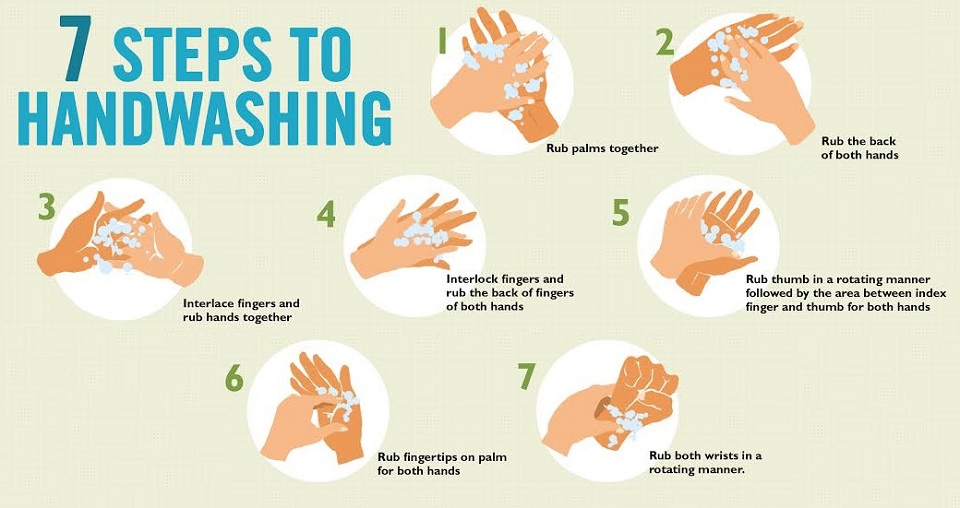
This year, the theme for the Global Handwashing day is “Raise a hand for hygiene”. UNICEF and the Indian Government has worked together to help promote better hygiene practices among children. The focus is on teaching children good habits at school, with 1.3 million primary and upper-primary schools participating in Global Handwashing Day celebrations.

Handwashing is one of the most cost-effective and simple methods that can reduce diarrhea, respiratory infections such as pneumonia and other diseases among children. Children acting as agents of change, taking the good practices of hygiene learned at school back into their homes and communities.  

Image source: (http://images.gmanews.tv/v3/webpics/v3/2014/10/2014_10_23_17_22_12.jpg)


Wednesday, 14 October 2015

Be Aware, Stay Safe!

Around the globe, October is a month of festivals and fairs, but we hardly realize that it is also Breast Cancer Awareness Month. It is an annual campaign to increase awareness regarding the disease. Breast cancer is basically the uncontrolled growth of cells, which results in formation of lumps within the breast. If not detected early, it can be a life threatening disease as it can also spread to other parts of the body. 

Breast Cancer is a global disease. Due to increase in life expectancy, increase urbanization and the adoption of unhealthy lifestyles, the number of cases across the globe is rising manifold and many young women are getting affected. In low- and middle-income countries the incidence has been rising up steadily in the last few years mainly because of lack of awareness and screening.


National Cancer Control Programmes

In India, this disease accounts for 25% to 31% of all cancers in women. In fact, a recent study of breast cancer risk in India revealed that one in 28 women develops breast cancer during her lifetime. This is higher in urban areas (one in 22) compared to rural areas, where the risk is lower at one in 60 women. The average age of developing breast cancer has also undergone a significant shift from 50 - 70 years to 30 - 50 years. 

A national cancer control programme is a public health programme designed to reduce the number of cancer cases and deaths and improve quality of life of cancer patients, through prevention, early detection, diagnosis, treatment, and palliation, making the best use of available resources.

The reason for such a rapid increase in the cases in India is that Breast cancer is still considered as a nonexistent entity by a majority of population, specifically in rural areas. Even in major cities, screening is also an 'alien' word for most people.


Be aware of symptoms

  • Change in size and shape of breast
  • Any lump or thickening in breast
  • Redness or rash on/around the nipple
  • Discharge (liquid) from the nipple
  • Constant pain in breast or armpit
  • Change in skin texture
  • Inverted (pulled in) nipple or change in its position/shape

Prevention is better than cure

  • Self examine your breasts. If you feel any change, then consult the doctor. 
  • It is advisable for women who are around 40 to get their mammography done. Mammography is a  simple radiographic technique, which helps in detecting irregularities in the breast tissue.
  • Addition of vegetables and fruits in your diet helps in maintaining a healthy body weight.
  • For new mothers, it is advisable to breastfeed their child at least for one year. 
  • Don’t smoke or drink alcohol in excess.


 Following myths to ignore about breast cancer


  •  A lump in your breast means you have breast cancer- Only a small percentage of lumps in the breast are cancerous. But if there is a persistent lump in the breast or any change in the breast tissue, always consult a doctor for a clinical breast exam.

  • If you have a family history of breast cancer, you will develop breast cancer, too- Only around 10% of individuals having breast cancer have a family history of this disease. Most women who are diagnosed with cancer have no family history.

  • A mammogram can cause spread of breast cancer- A mammogram or X-ray of breast helps in early detection of breast cancer. It requires a very small dose of radiation. The risk of harm from this radiation is extremely low.

  • Breast cancer is contagious- Breast cancer neither can be caught from someone nor can be transferred to someone. It is a non-communicable disease, which results from uncontrolled cell growth of the breast tissue.


An urgent need exists, therefore, to raise awareness about screening for breast cancer because the best protection is the early detection.

Sunday, 11 October 2015

No health without mental health


Urban living is on a continuous rise, fast-paced life, competitive environment and stressful lifestyle have given rise to many mental health disorders in one way or the other. There are thousands other reasons for the same, but the recent shift of lifestyle trends has become one of the leading causes of the mental health illnesses.


Every year, October 10 is observed as World Mental Health day.  This year WHO’s theme for the day is "Dignity in mental health". WHO is raising awareness worldwide of what can be done to ensure a dignified and healthy life for people suffering from mental illness.

Mental health disorders are on high not just in India but in many parts of the globe. Talking specifically of India, experts say that it is set to become the suicide capital of the world with 90 percent of the deaths caused due to one or the other depressive symptom, which is the biggest form of mental disorder. Patients, especially the youth, rely heavily on anti-depression pills and different physical and psychological therapies.
People having mental illness also suffer a lot from strong social stigma. This is basically because society has made stereotyped views about such disorders and they, largely thinks people suffering from mental illness are not normal human beings and they can affect their lives as well. This discrimination at every step further worsens the health of patient or delays their recovery.


WHO fact sheet says that for every lakh people in India, the average suicide rate is 10.9. Moreover, there is just one psychiatrist for every four lakh Indians. Depression is the most prevalent form of mental illness, estimated to exist in 3 of every 100 in urban areas like Mumbai and out of this, 1 in 3 is severely neurotic. Alzheimer’s disease was the most common of severe disorders (54%) followed by vascular dementia (39%). According to the government's estimates about 1 in 5 people in the country need counselling, either psychological or psychiatric.

There are certain ways by which we can promote mental health that includes-

  • Early childhood interventions (e.g. home visits for pregnant women, pre-school psycho-social activities,  combined nutritional and psycho-social help for disadvantaged populations)
  • Support to children (Skill building programmes, child and youth development programmes)
  • Socio-economic empowerment of women (Improving access to education and microcredit schemes
  • Social support for elderly populations (Befriending initiatives, community and day centres for the aged)
  • Programmes targeted at vulnerable groups, including minorities, indigenous people, migrants and people   affected by conflicts and disasters
  • Mental health promotional activities in schools (Programmes supporting ecological changes in schools and child-friendly schools)
  • Violence prevention programmes (By reducing availability of alcohol and access to arms)
  • Community development programmes
  •  Poverty reduction and social protection for the poor
  • Anti-discrimination laws and campaigns and promotion of the rights, opportunities and care of individuals with mental disorders.

In 2013, the World Health Assembly approved a "Comprehensive Mental Health Action Plan for 2013-2020". The Plan is a commitment by all WHO’s Member States to take specific actions to improve mental health and to contribute to the attainment of a set of global targets.
There are ways to deal with mental problems. Apart from the social structure support and other measures discussed above, there is a quick need of mental health policy to address the issue as soon as possible.

Image source:


(http://www.spectrumscience.com/wp-content/uploads/2013/10/a.jpg)